
Unifying the Banking Experience Across Digital and Branch Channels
A fragmented banking experience was creating friction whenever customers moved between mobile, online and branch channels. USMICRO addressed the underlying architecture — unifying customer data, preserving application state and giving branch teams secure access to the same current customer context.
What needed to change.
The bank's digital and branch experiences had evolved through different systems, vendors and technology decisions over time. Each channel functioned, but the customer journey did not consistently move with the customer.
Loan applicants could begin an application digitally and lose progress when moving between mobile, desktop or branch interactions. Branch staff often lacked visibility into activity that had already taken place online, which created repeated questions, duplicate data entry and unnecessary service effort.
Disconnected systems also made it difficult to maintain a consistent view of customer information, application state, rates and promotions across channels.
The resulting friction affected more than convenience. It created avoidable abandonment during loan journeys, increased service and branch contact volumes, added operational cost and weakened the seamless experience customers increasingly expected from digital-first financial services.
How the problem was approached.
USMICRO approached the problem as an integration and data-architecture challenge rather than a front-end redesign exercise.
Instead of improving individual channels independently, the engineering team focused on establishing a common information and state layer that mobile, web and branch applications could consume.
The approach centered on three principles: create a single current customer context, preserve application state as customers moved between channels, and ensure that the same information could be accessed securely by both customer-facing digital applications and authorized branch personnel.
USMICRO worked across the existing technology landscape rather than requiring the bank to replace every underlying platform. Integration services and APIs were used to connect disparate vendor systems while creating a more consistent experience above them.
What changed in the technology environment.
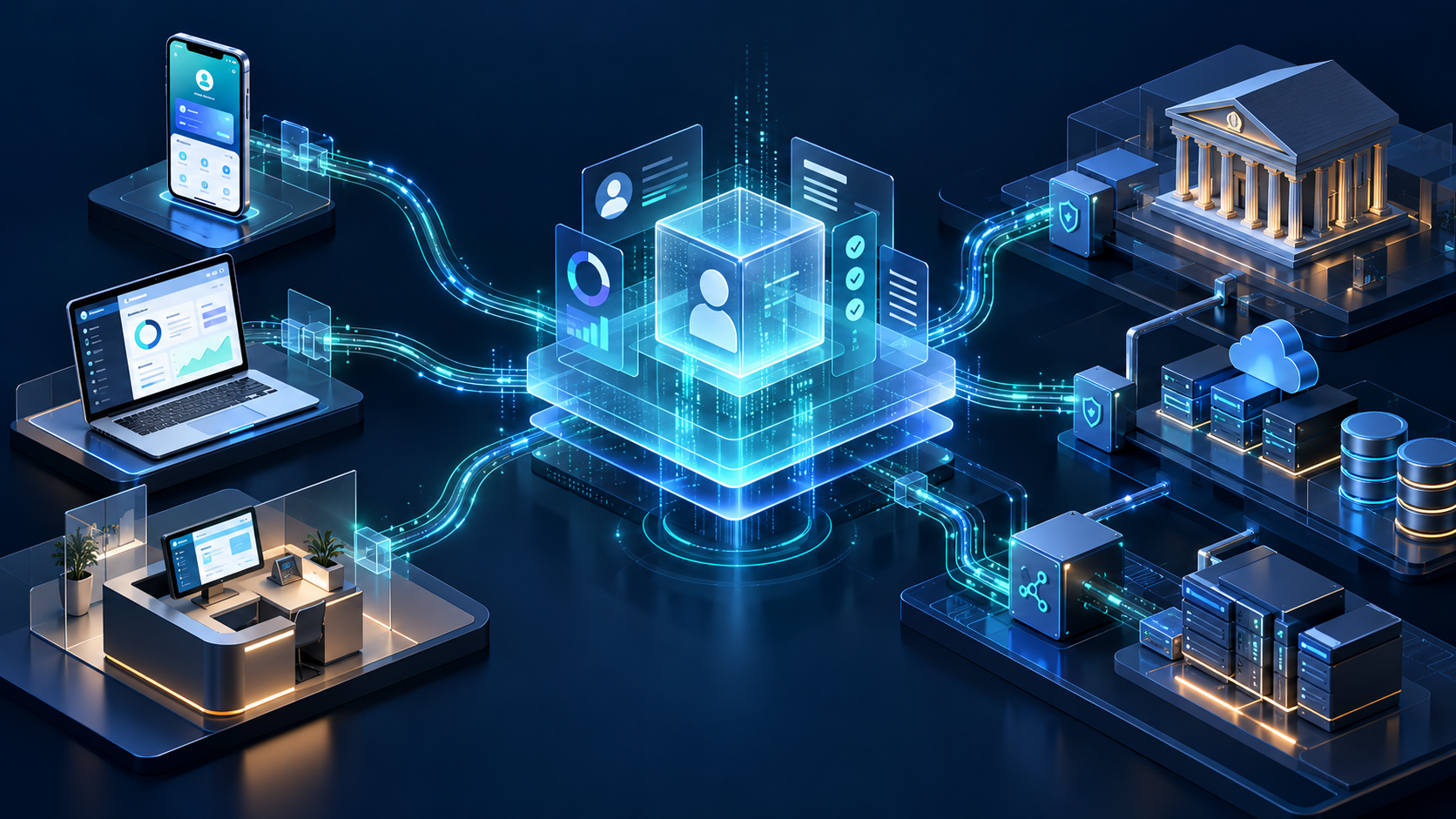
USMICRO introduced a real-time integration layer between the bank's channel applications and underlying banking systems.
A centralized data layer established a shared customer view so mobile, online and branch experiences could work from current information instead of maintaining isolated versions of customer context.
Session-state persistence was introduced across digital channels, enabling customers to continue loan-application journeys without restarting or losing previously entered information when moving between devices or channels.
Secure access-control patterns were also unified so authorized branch staff could see the same current customer and application state available through digital channels.
Enterprise API gateway capabilities and secure core-banking connectors provided controlled access to existing systems, while cloud-based data services supported the real-time exchange and retrieval of customer information.
The architectural shift was therefore from channel-specific state and fragmented data access toward shared customer context, persistent journey state and governed integration across channels.
What can be credibly demonstrated.
The unified architecture materially improved both the customer journey and the operating experience of branch and service teams.
Preserving application state across channels reduced abandonment and created a more continuous lending journey for customers moving between mobile, online and branch interactions.
Giving branch and service teams access to the same current customer and application context reduced duplicate inquiries, repeated information requests and unnecessary service effort.
Streamlined workflows and unified data retrieval also lowered the operational effort required to support customer journeys across channels.
Beyond the measurable improvements, the bank gained a more coherent foundation for delivering consistent customer experiences without requiring every existing banking platform to be replaced.