Moving B2B Ordering from Email to a Governed Digital Portal
USMICRO used an ODC-led adoption and engineering model to shift B2B ordering away from email and into a governed digital portal — combining vendor onboarding, automated scorecards, workflow standardization and compliance visibility.

What needed to change.
The enterprise had invested in a B2B ordering portal, but adoption remained low across a large portion of its vendor ecosystem.
Despite significant transaction volumes, 78% of B2B orders were still being initiated through email rather than the portal.
Vendors continued to use email because it felt familiar and immediate, while procurement teams often tolerated manual exceptions and side-door processes to keep work moving.
That behavior created a series of downstream problems: inconsistent version control, lost or duplicated approvals, manual order entry, weak audit trails and limited visibility into which suppliers were following the intended operating process.
The technology itself was therefore not the only issue. The larger problem was adoption, governance and the lack of a measurable mechanism for making the portal the default path for doing business.
The challenge was to change operating behavior without creating unnecessary friction for vendors or overwhelming internal teams with manual enforcement.
How the problem was approached.
USMICRO established a dedicated Offshore Development Center model combining engineering, operational analysis and ongoing vendor-adoption support.
The ODC team began by auditing order-channel data to understand where transactions were entering the organization, which vendors were bypassing the portal and where email-based workflows were introducing delay or manual rework.
Based on that analysis, USMICRO designed a 90-day adoption and governance programme focused on three areas: reducing friction in the portal experience, introducing measurable compliance tracking, and standardizing the workflows surrounding order submission and approval.
Offshore engineering pods developed automated scorecard logic and exception-monitoring workflows so portal adoption could be tracked objectively rather than managed through anecdotal follow-up.
The ODC team also supported ongoing vendor onboarding, portal enhancement and compliance reporting, allowing the portal to evolve from a passive application into a governed operating environment.
What changed in the technology environment.
USMICRO introduced a governance and workflow layer around the B2B portal so that adoption, exception handling and vendor performance could be measured and managed continuously.
Automated portal-compliance tracking captured how orders entered the organization and identified transactions that continued to bypass the intended digital workflow.
Dynamic vendor scorecards measured portal-adoption rates, email-exception volumes, order-cycle performance and adherence to the agreed operating process.
Workflow automation standardized order capture, approvals, change tracking and escalation routing so that vendors and procurement teams had a clearer default path for completing transactions.
Enterprise integration middleware connected portal activity with downstream business systems, allowing order and compliance information to move through the wider operating environment without creating additional manual reconciliation.
Real-time compliance dashboards gave leadership visibility into supplier adoption, exceptions and performance trends.
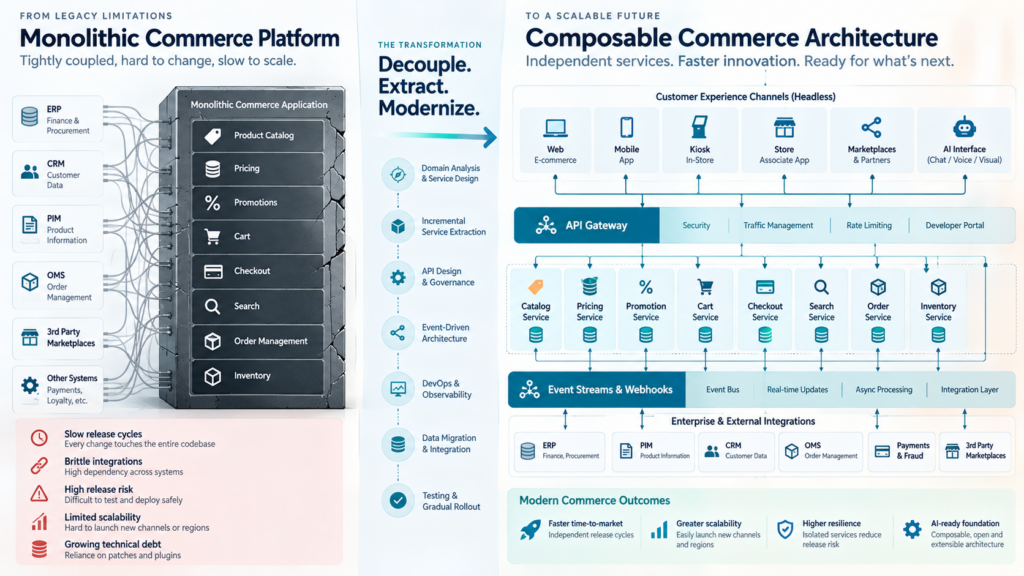
The architectural shift was therefore from an optional portal surrounded by uncontrolled email-based workarounds toward a measurable digital operating model with automated workflows, vendor scorecards, exception monitoring and governance visibility.
What can be credibly demonstrated.
The programme materially shifted B2B ordering away from unstructured email and toward the governed portal environment.
Reducing reliance on email lowered the amount of manual order handling and improved consistency in how orders, changes and approvals were captured.
Vendor scorecards and exception reporting gave procurement and leadership teams a clearer view of who was using the portal, where non-compliance remained and which suppliers required additional intervention or onboarding support.
Standardized workflows improved auditability and reduced the operational ambiguity created by parallel ordering channels.
The 90-day programme also established a repeatable model for portal adoption that could continue through the ODC rather than relying on one-time implementation activity.
More importantly, the portal became part of the operating model rather than simply another software tool available to vendors.